 Damon Salvatore AI
 Damon Salvatore AI Team
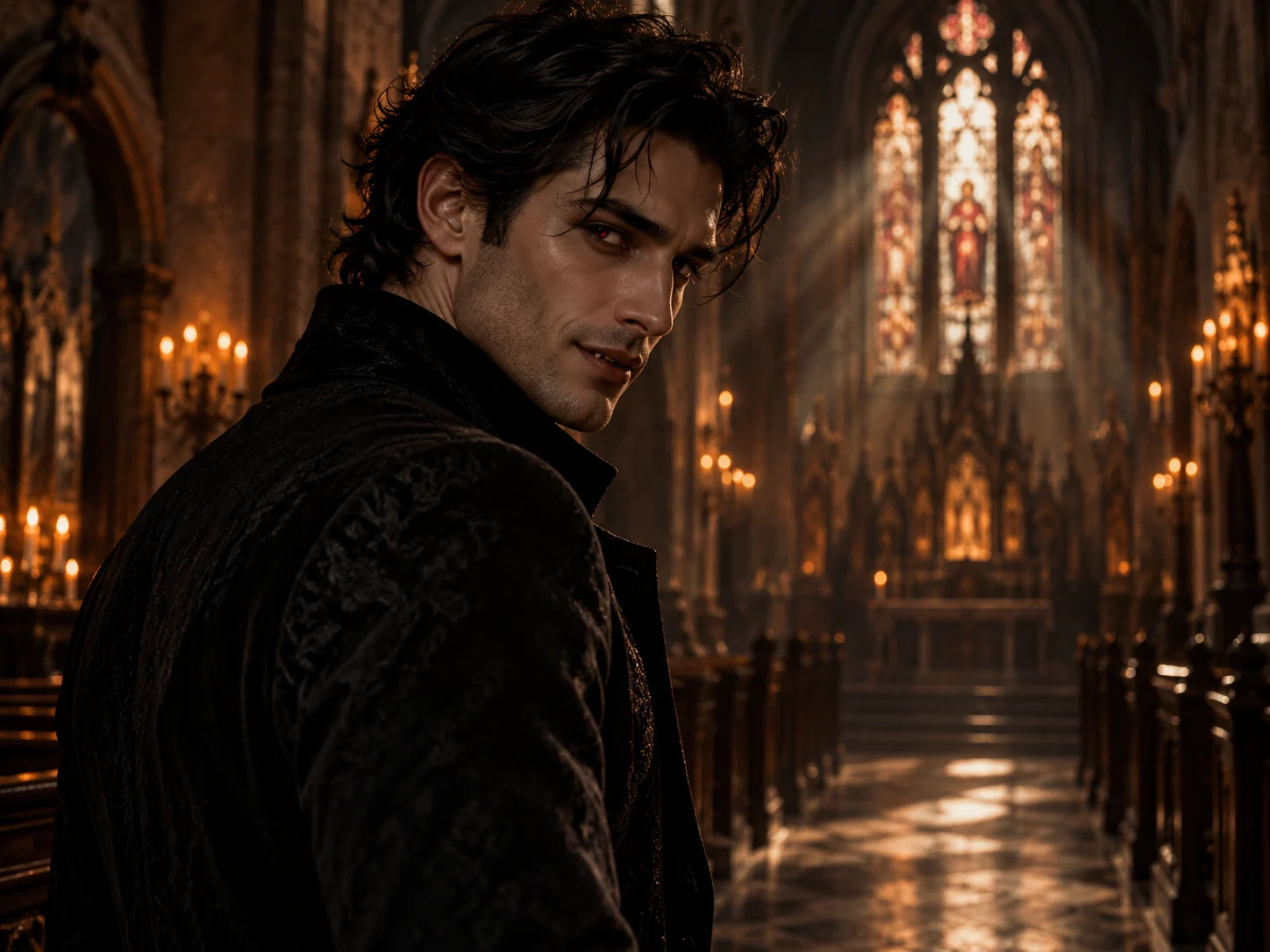
Most pages about this trend are trying to sell you a generation. This one tracks the trend itself — the versions people are actually posting, how interest in it has moved across the year, why one cut keeps outliving the others, and what a post in late 2026 is realistically up against. If you already know you want one and only need the mechanics, the generator page covers upload, formats, pricing and posting in one pass.
What the trend is built from: three parts, not one
Every clip that reads as “the Damon Salvatore AI trend” is a stack of three things, and the stack is why copies of it fail.
The scene. A fandom has spent more than a decade editing one church sequence — the walk in, the room turning, the holy water, the sign of the cross, the smirk. We map that shot by shot in the church scene breakdown, so this page won't repeat it.
The versions. Once people could put their own face in, the scene stopped being one edit and became a small family of them: the full walk-in, the smirk alone, and the sound-swapped cut. Each one asks the viewer to read a different story.
The audio. This is the part people skip and then wonder why the result feels flat. The clip is scored by its original sound; the smirk lands where it lands because of where the music already is. A trend edit with the reference audio swapped out is a different piece of content wearing the same clothes.
Change any one of the three and it stops reading as the trend — which is exactly why some attempts collect views and some collect nothing.
How interest has actually moved this year
The thing most people get wrong about this trend is assuming it is one continuous rise. It isn't. Interest shows up as short spikes with long quiet stretches between them, with several distinct waves in the last twelve months.
| Period | What the curve did (relative interest, 12-month high = 100) |
|---|---|
| Late Nov 2025 | first measurable spike — 59 |
| Late Jan 2026 | the 12-month peak — 100 |
| Late Apr – early Jun 2026 | a plateau of spikes — 73, 66, 69, 66, 69, 60 |
| Late Jul 2026 | one-week spike — 74 |
| Late Sep 2026 | 83, the wave that carried into October |
| Mid Oct 2026 | 80 |
| Week of 25 Oct 2026 | 56 on a week that wasn't finished yet |
Those numbers are Google Trends' relative interest — global, weekly, normalised so the twelve-month high equals 100. They are a shape, not a search count: a quiet week does not mean zero searches, only lower relative interest than the January peak.
The shape matters more than any single number. Each wave is a new cohort, not the same audience returning: someone discovers the church edit, makes one, their feed fills with it, and the next spike arrives when a fresh group of people sees it for the first time. That's why the trend can look “new” to you in October and “over” to someone who posted in February — you're both right, about different waves.
Why this one outlives the other AI trends
Most photo-to-video trends die the week they peak. This one keeps coming back because of how the scene is built, and none of that is about the model behind it.
It reads with the sound off. The sequence is legible in silhouette: someone enters, the room reacts, the gesture, the smirk. No caption, no context, no fandom knowledge required.
The reaction is inside the clip. The turning pews are the audience's response, pre-recorded. A viewer doesn't have to decide how to feel — the clip performs the reaction for them.
It's a villain, not a hero. The appeal is being the character everyone knows is trouble and liking it anyway. That's a narrow, durable niche.
The joke is on the person posting. The trend works best when the face in the frame clearly knows it's absurd. Trying to look genuinely cool is what flattens these edits.
The versions in the wild
The full church walk-in is the default and the most recognisable. It carries the whole beat — entrance to smirk — but also has the most competition.
The smirk-only cut survives on the close-up and the audio cue. It is quicker to watch and easier to get wrong.
The sound-swapped remix uses the same visuals with a different track and mood, useful if your audience has already seen the original twenty times.
Non-Damon faces are the second life of the whole thing — the trend stopped being about the character once people started putting their own friends in the frame.
If you want the exact shot list, prompts and per-version timing, the template page has them; the step-by-step walkthrough lives in the tutorial.
So is it too late?
As of the end of October 2026 the current wave was still active. The mid-October weeks were near the September spike, while the week of 25 October was incomplete, so there is not enough evidence to call a new peak or a clear decline. The trend is mid-wave, not demonstrably over, and not at its all-time high either.
Which means “late” isn't your actual risk. Sameness is. The feed is already full of church walk-ins, so a new post is judged against the last twenty it looked like:
- The face is the differentiator. A recognisable person beats a perfect render of a stranger.
- The first second carries the whole post. If the entrance doesn't read immediately, the smirk is never seen.
- Three posts beat one expensive one. Testing three faces or versions is cheaper than polishing one.
Realistic expectation: a good trend post buys reach, not a following. Treat it as distribution for something else you're building.
Trend FAQ
Is the Damon Salvatore AI trend the same as the church edit?
The church edit is one version — the fullest one. The trend is the wider wave: smirk cuts, remixes, and other people's faces in the same ten seconds.
Did this trend start in 2026?
No. The scene and its sound have been fandom edit material for years, and interest in the AI version was already spiking in late 2025. What's new is the photo-to-video layer: uploading one picture instead of learning an editing app.
Why does it keep coming back instead of dying?
Each wave recruits new people rather than re-selling the same ones. The quiet gaps are where the next cohort arrives.
Do I have to look like the character?
No — the clip does the character work; your job is a clear, well-lit face that the model can read. The generator page covers which photos work.
Which version should I post?
The full walk-in if your audience is fresh; the smirk cut if they've seen the church version too many times; a remix for an audience outside the fandom. Don't post all three at once — one per week reads as a person, three in a day reads as a content farm.
Make yours in one photo. Upload a picture on the generator page and pick the version that fits your feed. $6.99 per video, no subscription.